
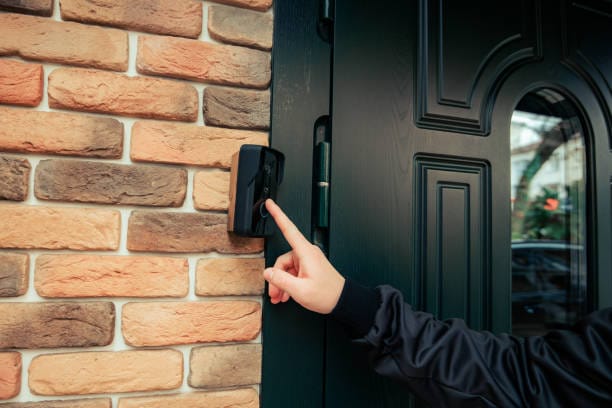

Doorstep scams occur when someone comes to your front door to either scam you out of your money, personal information or even to gain access to your home to steal valuable items. Scammers conducting this type of fraud can take many different forms including door-to-door sales, traders, charity collectors, utility officials or even a stranger in need of help. These scams can be challenging for victims to avoid as there is an added pressure when dealing with someone face-to-face. Here we explore the various types of doorstep scams and explain how you or a loved one can stay protected.
Common forms of doorstep scams
Bogus tradespeople
From roofers, gardeners and plumbers, rogue traders can take various appearances. This scam occurs when fake tradespeople turn up at your front door and pretend to notice issues with your home. Often, they will offer to repair it within a very short amount of time and at a lower cost than usual.
If you agree for them to complete the work, they will usually ask for upfront payment. After receiving payment, the scammer will usually disappear without completing the work and without trace.
Door-to-door sales
Another common type of doorstep scam involves fraudsters turning up at your door wanting to sell a product or a service. Often these sellers will be pushy and mention they have significant discounts, or a limited time offer available. A forceful style can often be an indicative sign of a scammer.
Door-to-door sales are not illegal, but the seller must comply with consumer protection laws. If selling goods, a Pedlar’s Certificate may be required.*
Fake police or bank staff
Be wary of anyone who knocks on your door claiming to be from the police or from your bank. These individuals will ask for personal bank details like your PIN number or to see your bank cards, which legitimate police or bank workers would never ask for. Utilities ‘officials’
Utilities ‘officials’
This type of doorstep scam involves individuals impersonating someone from your gas or electricity provider but without official proof of ID. After they have gained your trust, they will enter your property and pretend to take a reading. Once inside, they may steal valuable items or proceed to gather personal information that can be used to commit further fraud.
Your gas or electricity provider should contact you prior to a visit and their workers will always provide official ID.
Fake charity workers
Playing on emotions is an approach used by scammers to get you to part with your money, especially from those who are pretending to be from a charity. Here, fraudsters will sell an emotive story and persuade you, sometimes intensely, to donate on the spot.
Ensure those who say they are working on behalf of a charity can provide a registered charity number. If you would like to donate, you can always mention you would rather donate online instead.
Strangers in need
Some scammers pose as strangers in desperate need of help. Fake emergencies are crafted, and the individual may ask to enter your home to use your phone to call a family member, friend, a breakdown company or even to use your bathroom. Victims often feel sympathetic and will offer to help where they can. However, fraudsters can take advantage of those who are good natured and once in a property will look to steal valuable items.
*A pedlar’s certificate is a document authorising the bearer to sell goods or services door-to-door anywhere in the UK for up to 12 months.
Common tactics used by doorstep scammers
Pressure tactics: Individuals will insist you make a decision on the spot. This may be to purchase a service, donate or to provide personal information.
Mention of neighbours: Often scammers will mention they are doing work for your neighbours or have spoken to them to try and gain your trust.
Too good to be true offers: Services or products may be offered to you at a very low price which you feel is too good to turn down.
Mysterious issues: Rogue traders will pretend there are issues with your home (for example with your roof) that requires urgent attention.
Professional appearance: Often individuals will wear clothing to replicate uniforms, carry fake IDs, or use official-looking paperwork to convince you they are genuine.
Emotional appeals: This particularly applies to those who are pretending they are working on behalf of a charity. Scammers will aim to exploit your emotions, using stories or urgent need to persuade you into donating money.
Unsolicited visits: Normally fraudsters will appear at your door without any prior contact or warning. This is usually done to catch you off guard. Be wary of anyone that turns up at your door without contacting you in advance.
Tips to protect yourself from a doorstep scam
Don’t be afraid to say no: Never feel like you have to say yes. If you feel uncomfortable, unsure or intimidated, trust your instinct. Don’t feel embarrassed about turning someone away. Saying no to any offer, charity request, or service provider who knocks on your door is perfectly fine. Additionally, only let someone into your home if you’re expecting them or they’re a trusted friend, family member or professional.
Take your time: Don’t feel pressured into making quick decisions. Making a rushed decision may lead you to making an error of judgement. Anyone from a legitimate organisation will give you time to consider your options and won’t pressure you into providing any sensitive information or making a payment. It is also worth always getting a second opinion on anything ifyou are unsure.
Verify credentials: Always ask for identification – a genuine person won’t mind. Often scammers will carry fake ID so ensure you verify the company they represent by phone or by checking online. Never use contact details the person at your door gives you.
Never provide sensitive information: Some scammers may pretend to be from the police or your bank requesting information such as card details. Never disclose your PIN, bank details or give them your card. Legitimate individuals will never ask for this information via house calls.
Put up signage: Place a “no cold callers” sign clearly visible on your front door or window. This can deter those who are wanting to show up at your door unexpectedly.
Consider a smart doorbell: These allow you to speak to someone on your doorstep without opening the door. These can also be particularly useful if you have a loved one who is vulnerable and lives by themself. You can connect the camera to your own device, so you are notified whenever they have a caller.
Be sceptical: If an offer seems too good to be true, it most likely is. Research and compare prices before agreeing to any deal, especially one provided by strangers who knock at your door.
Related Articles

Our Insights
MAY 20, 2026
Jon’s Savings Blog – ISA Changes in 2027
There’s a famous saying: “The best time to plant a tree was 20 years ago. The second‑best time is now.” Well, when it comes to ISAs… the tree is about to get a little smaller.

Latest News
APR 17, 2026
A Q&A with our CEO Tracie
Here’s a quick Q&A from our CEO Tracie Meadows diving into our new rebrand.

Our Insights
OCT 15, 2025
Jon’s savings blog – The importance of talking about money
Money. It’s not going away, and it’s one of the most essential parts of our lives, and yet, for many, it’s still one of the hardest things to talk about. Whether it’s how much we earn, how much we save, or how we manage debt, money conversations are often avoided due to discomfort, fear of judgment, or simply not knowing where to start.
Our Insights
OCT 13, 2025
A spot of phishing
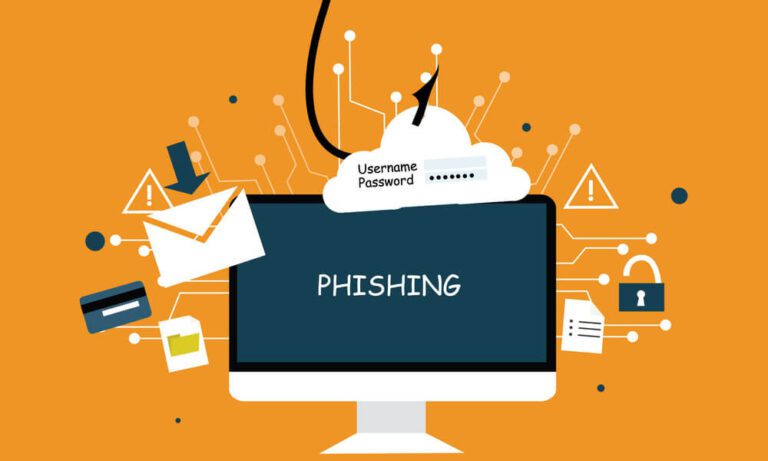
It's been reported that 28%* of the population were hybrid workers at the end of 2024. There are so many benefits that working from home offers for both employees and companies: more flexible hours, increased productivity, and just a better work-life balance - especially being able to sit in the sun in the garden at lunchtime! However, in looking at all these benefits, it's also important to understand what potential cyber security issues may arise from working from home. Also, as a business, we have taken important steps to improve the education of our colleagues regarding phishing and how it affects everyone both at home and in the office. So… what is phishing? 'Phishing' is when criminals use fake emails, phone calls, texts or websites to trick their victims. Most phishing scams will attempt to trick their victims into thinking they are a legitimate company or website with underhand tactics. Usually, these fake messages will try to make you click a link, visit a website or provide personal information. Opening these links may give your computer a virus or allow the criminal to access your private information. Phishing can come in many forms, whether they're emails pretending to be from companies that you're a customer of, spoof SMS messages pretending to be your bank, or even false communications from your workplace. With the rise of AI, these types of attacks are becoming more sophisticated than ever, and it's getting harder to discern what's real and what's not. We want to outline some methods that criminals use in phishing emails, as well as equip you with the knowledge of what to do if a work communication that you've received just doesn't feel right. Understanding your inbox Your inbox is the main channel that scammers will use to try and trick you into their scam. Below, we've listed some of the common phishing emails that criminals might utilise: Spam emails The most common (and annoying) type of unsolicited email that people receive. They are sent to large mailing lists and typically do not have anything to do with the recipient. They might be trying to sell you something or tell you that you've won a prize for example. While advertisement spam mail can seem harmless, any email from an unknown sender that asks you to click a link go to a website may be attempting to steal your personal data. It is always best to mark these kinds of emails as spam and then delete them. Deceptive emails These phishing emails have a much smaller mailing list, with the criminal pretending to be someone who is familiar to the recipient in some way, whether that be a company they are subscribed to, their bank or their place of work. A deceptive email might pretend to be from your internet provider informing you about a price increase. They might even use your location to pretend to be from a local council. As these emails are more targeted to a smaller group of people, they have a higher success rate for the criminal than spam phishing. Spear Phishing emails These are the most targeted types of phishing emails, and therefore the hardest to spot. They are specifically crafted for a handful of people or sometimes tailored for the individual to try and appear legitimate. Criminals may use things like your social media accounts to craft their attacks further, using names of people you know. Spear phishing emails might pretend to be your manager at work asking for your bank account details for payroll. When criminals target more senior members of a company or those who have IT access, this kind of spear phishing is called 'whaling'. Here's some useful points to look out for If a suspicious-looking email has more than one of these red flags, it's probably a phishing email. Date and time - Was the email sent at a strange time of day, outside of usual working hours? If you weren't expecting the email, think twice before clicking any links. Sender name and email address - Do you recognise the email handle? Look carefully at the domain name, and make sure it matches the usual sender exactly. Be careful on letter and number substitutions, like 0's for O's, or l's for I's. Captivating subject line - Does the subject line entice you to read further? If the subject of the email features words like NOW or HACKED, it might be trying to get you to read though the email further and a demand action. Spelling and grammar - Are there strange wording choices, misspelled words or poor grammar in the email? Demanding action - Does the email tell you that you need to do something quickly, or use threatening language? Phishing emails will insist that you download a file, click a link or provide information immediately in order to scam you. Links and attachments - Is there an incorrect link when you hover the cursor over it, or an unexpected attachment in the email? These links could take you to phishing websites, and the suspicious attachment might download malware onto your device. Too good to be true - Does what they're offering sound too good to be true? Unfortunately, it's unlikely someone will truly be selling expensive items for very low costs, or that you really are entitled to a large sum of money for no apparent reason. If it's too good to be true, it probably isn't true. Phishing websites Phishing websites are usually what phishing emails will be asking you to visit. These phishing websites 'spoof' legitimate webpages - they pretend to be a website you know and trust to trick you. Even if you are utilising an anti-virus software, these websites can give your devices malware or steal card details or login credentials. Here's some ways that you can identify fake websites: Suspicious domain names - In spoofing established websites, criminals will register their websites with names that are similar to well-known websites. These are usually only different by subtle spelling or letter changes. Some websites linked in emails will have nothing to do with the content of the emails. If the domain is different than the usual site, this is a red flag. Top Level domain - These come at the end of a URL; things like '.com,' '.co.uk' or '.org.uk'. Sometimes, a phishing website will be the same as the real page, with the only different being the top-level domain. Be wary of supposed large websites and companies using the less common top-level domains such as '.biz', '.cn' or '.casa'. http/https - At the beginning of the URLs of webpages that you are inputting sensitive information like card details or a phone number, the domain should be using 'https'. If it is only using 'http,' this is a major red flag. Website content - Official company websites will have sharp webpages, with tight writing and content. If there are low quality images and spelling mistakes on the website, it might be a scam. Fraud websites don't often have an 'About Us' or 'Contact Us' page, so look out for those as well. What should you do if you've been sent a phishing email? Ignore all attachments and links. Don't open any attachments or links from a source that you don't trust. Don't reply. Don't reply to scam emails, even just to say 'No,' as then the scammers will know your email is active and will send you more emails. Double-check before sending any details. If you get an unexpected email from your job, look up their contact information and give them a quick email or call them to check. Stay protected. Make sure that your anti-virus software is updated on your personal devices, and make sure you understand whatever anti-virus measures are in place on your work devices. Report the email. While not engaging with the email is the correct thing to do, reporting the email is also important in helping the scammer stop. Reporting Phishing If you are remote working, report the email to your employers IT services. This is especially important if the email has any sort of detail from your work, as it is more than likely that the criminal will try to target other employees as well. Even if you think you're being paranoid, it's better to be safe than sorry. Forward any suspicious emails to report@phishing.gov.uk. As of June 2025, the National Cyber Security Centre (NCSC) states that there have been 43 million scams reported, which has resulted in 225,000 scams being removed across 405,000 URLs. Always report suspicious emails and sites. Whilst you might not have fallen for the scam, their next target might not be so lucky. Reporting these phishing scams not only protects you and your employer but might also help someone else too. If you think you've been a victim of phishing fraud, you should report it to Action Fraud, the UK's national fraud reporting centre. *The Office for National Statistics
Community
SEP 22, 2025
What is UK Savings Week?
UK Savings Week 2025 UK Savings Week is all about getting people to think about savings, whether they’re frequent savers or first-timers. Even for those who are unable to save at the moment, UK Savings Week encourages us to take a closer look at our finances and understand what we’re seeing. This week, we urge you to join the savings conversation. Even with the cost-of-living crisis, understanding how savings operate is crucial. No matter what your circumstances are or where your finances are at, savings are key. Savings are really important. It doesn’t matter if they’re stored away for a rainy day, or you’re saving for a dream holiday, they have to be looked after. How much you’re saving, for how long and how much will vary from person to person. UK Savings Week is all about helping individuals save what they can, where they can. Even if it is a little bit here and there, once you’ve built the savings habit, they’ll start to grow. UK Savings Week aims to help everyone; they have tips and tricks for first-time savers, as well as advice to current savers to help make the most of their accounts. From understanding the financial jargon to picking the right savings account for your needs, UK Savings Week wants to help make a big financial difference to each saver. Take a look at the UK Savings Week page here.
Community
SEP 22, 2025
UK Savings Week – types of savings accounts…
What are the main types of savings accounts? With so many different types of savings accounts out there, it can be quite daunting to make sure you’re picking the right one. Here are some of the main types of savings accounts to help keep you informed. Easy Access Accounts: Also known as instant savings accounts, these allow you to take out your money at any time. Usually, these accounts only need a small amount of money to open, and you have access to your money whenever you need it. While these accounts have low interest rates, they are an accessible place to keep your emergency funds. Notice Accounts: These accounts tend to have higher interest rates than easy access accounts, and might need a higher deposit amount to open a notice savings account. You also need to give the account provider an advanced notice before you’re able to withdraw money, which can range from around 30 to 120 days. Be careful though, as withdrawing money before the notice period could lose you interest. Regular Savings Accounts: These accounts usually ask you to commit to depositing into a regular savings account every month for a set period of time. Keeping up with payments means that the interest rates on regular savings accounts is higher, but if you miss a payment the rates could decrease. You could also be limited on the amounts of times you can withdraw from these accounts. Fixed Rate Accounts: These accounts, also known as fixed rate bonds, require you to deposit a single lump sum for a set period of time, which could be anything from one year to five years or longer. You’re unable to make withdrawals until the fixed term is up, with a loss of interest or a penalty to pay if you do decide to withdraw. Fixed rate accounts are usually a fixed interest rate so you’ll know exactly how much interest you’ll earn over a term. Individual Savings Accounts (ISAs): ISAs are the same as other savings accounts, except that they allow you to save without tax being deducted. There are different types of ISAs, including easy access ISAs, fixed rate ISAs and stocks and shares ISAs. Your savings are tax-free and you are able to make regular payments or one-off deposits without affecting the interest rate. There is a limit to the amount you can save in each tax year, which is currently £20,000 per person. Lifetime ISA: The Lifetime ISA – LISA – can help you save for your first home, as you get a government bonus of 25% of the amount saved when you use it for a house purchase. LISAs can be used to save for later in life as you can withdraw your money alongside the 25% bonus once you are aged 60. However, if you withdraw money from your LISA for any other reason, you don’t get the government bonus, and you will have to pay a penalty. The limit for how much you can save a year in a Lifetime ISA is £4,000, and you must be under age 40 to open an account. Help to Save Accounts: If you are on certain Tax Credits or Universal Credit you may be eligible for Help to Save. If you qualify and are able to save, it is a good option, as for every pound that is saved, the Government gives you a bonus of 50p. Accounts are open for four years and you can save up to £50 a month.
Community
SEP 22, 2025
UK Savings Week – Support Resources
Support Resources With the cost-of-living crisis affecting us all, it is alright if you are not currently in the position to save. If you need help in managing your money, here are some organisations that are ready to offer you expert and impartial advice, as well as resources. Money Helper – Free and impartial money and pension guidance. On their website they host different savings and mortgage calculators to help you take exact stock of your money, where you might have space to cut back on costs and many more things. If you are struggling with the cost of living, they have specific articles that can aid your worries. Have a look at their articles here. National Debtline – Free independent debt advice. Not only does this charity offer free debt advice via their webpages, but it also allows for online chatting via the phone or their webchat to their debt advisors. As they are authorised and regulated via the Financial Conduct Authority (FCA), you can be confident in National Debtline that their advice is held to a high standard and within your best interests. If you need debt advice, have a look to their webpage here. Step Change – Expert debt advice and fee-free debt management. They offer articles and savings calculators to help you understand the state of your finances, as well as offering specific advice for each of your potential financial needs. If you’re not sure where to start, their quick questionnaire will help you figure out what kind of help you might need, and then they’ll provide you with their relevant articles. If you’re not sure where to start, take their questionnaire here. Citizens Advice – Assisting people with legal, debt, consumer housing and more. Citizens Advice covers a wide base of potential concerns, with financial advice being one of the key sectors next to potential health or family concerns. Alongside their articles of advice, they also offer template letters to creditors that you are able to adapt to your own needs. Take a look at their website here. Take Five – Impartial advice that helps prevent email, phone-based and online fraud. Take Five is a national campaign that empowers both businesses and individuals alike to better protect themselves against financial fraud. Their motto of Stop, Protect and Challenge offers insight on how to make sure you are not a target of financial fraud. The have various support pages for protecting both yourself and your business from online fraud. Take Five also endeavour to update their website whenever a scam is becoming more popular to keep people aware. If you’re not sure how to protect yourself from online fraud, have a look at their website.
Community
SEP 22, 2025
UK Savings Week – Smart Savings Tips
Savings. They’re what you make of them. Whether your savings are a safety net for sudden emergencies, or a launchpad to your next business venture. A ‘just in case’ account or a ‘brand new car’ account. Savings are what you make of them. So how do we make sure we’re saving in the best way possible? Here are some tips to make sure your savings are smart ones. Think about your finances Can you save more than you do now? Look at your money – Understand what money is coming in and out of your account. If you know how much money you need for a week, you can see how much more you could be saving. Emergencies – Be realistic about how much you’d need in an emergency, and make sure that money is able to be accessed easily. Ensure that your emergency savings are in an account that is easily accessible to you as well – a separate emergency fund is key to being financially smart. Need vs Want – Decide what things you need, and what are ‘nice to have’. Are they extras you could live without? While giving yourself a sweet treat once in a while is never a bad thing, when you’re looking to save, these ‘nice to have’s are what can really help you cut down on costs and increase your saving potential. The right account – For that extra money, putting it into a savings account will help you earn more interest and increase your savings. Do some research to understand which account is best for you. Top Tip: Whether it’s on a spreadsheet, savings app or on paper, writing things down is a great way to look at your finances, especially if you have more than one kind of bank account. Putting them all down together is a great way to consolidate and understand your financial situation. Create goals Having targets to aim for means you’re more likely to achieve them. Be realistic – Make sure your goal is high, but not too much of a stretch for you. You want your savings goal to be satisfying when you hit it, but not something that is impossible. This sweet spot is right where your savings goal should lie. Be specific – Make your target specific. Instead of ‘saving for a holiday’, say ‘saving £4000 to go to Spain next August’. When you have a specific goal in mind, it makes it that much easier to be determined to reach the goal. Keeping your savings focused is a great way to stay motivated. Be confident – Take confidence in knowing you can save even more than you already have. You’ve already proven to yourself that you can do it. Be proud of what you’ve already saved, and remind yourself that you can keep at it. Consistency is key. Top Tip: Have a visual reminder that will help you save. If you’re saving for a dream holiday, make the destination your computer background, or a picture that you keep on your fridge door. Every time you see that picture, you’re going to feel more determined to reach your savings goal. Stay in control Feeling like you’re in control will help you build your savings. Think time – Allocate some time to regularly check in on your savings. Even if it’s half an hour every week, giving yourself time to check back in with your goals and your savings is important in understanding what your money is doing. Know where your money is and what deals are ending aids you in staying in control of your finances. Details – Make sure you understand the terms and conditions of any accounts you are thinking of opening. Financial jargon can be hard to understand, so ensuring that you know all the ins and outs of your different kinds of savings accounts will help you become the best smart saver that you can be. Stay positive – Congratulate yourself on hitting your milestones, and don’t be too disheartened if you miss a target. It’s all about consistency and motivation. You’ve got this! Top Tip: There are some great apps and online tools to help streamline your saving, whether it is automatically saving for you, collating your spending or helping you calculate your budget. These are just some savings tips to help you become the best smart saver that you can be. If you want more information about UK Savings Week, have a look at their website.