Impersonation Fraud
Impersonation fraud is where individuals are convinced to make a payment or give personal and financial details to someone claiming to be from a trusted person or organisation. These can include banks, the police, a delivery or utility company, communication service provider, a government department such as HMRC or a friend/family member. Criminals use a tactic called social engineering to groom and manipulate people into transferring money or divulging personal and financial details.
This is a common scam type that many people fall victim to due to various reasons. Individuals are often pressured into taking swift action as scammers convince them the situation is either very urgent, or that the victim may face serious repercussions if they don’t give the information the criminal needs.
People also can be too polite to decline, or simply feel they trust the person or organisation without questioning. If you get asked to send money urgently, always be suspicious, especially if you’ve been contacted unexpectedly. Don’t assume a person you are dealing with is who they say they are.
5 ways to stay safe from impersonation fraud
1. When faced with a request for personal or financial information, stop and think before clicking on any links or replying to text messages asking you to make a payment.
2. Never let someone gain remote access to your computer or phone that has called you out the blue. If it doesn’t feel right, you can hang up on them. Only criminals will persist in getting your information.
3. Avoid logging on to financial accounts using public WiFi.
4. Banks or police will never ask you to move your money to a ‘safe account’ because your ‘money is at risk’. If this happens, hang up, and call them back on a number you know to be correct. Scammers can change the caller ID to make the number seem trustworthy.
5. Only give your personal or financial information out to services you have consented to and are expecting to be contacted by.
Examples of impersonation fraud
Bank impersonation/Transfer money to a ‘safe’ account
An individual receives a call from someone claiming to be from their bank’s fraud team enquiring if several payments on their account were actually made by them. Individuals usually don’t recognise these and are advised that their account has been compromised, and they should urgently move money into a ‘safe’ account in order to protect it.
This money then gets transferred directly into the criminal’s account. By this time, it is too late for the victim. Bank impersonation is a widespread type of deception that takes advantage of people’s trust in financial organisations.
Friend/Family in need scam
This scam typically involves criminals texting individuals claiming to be a family member and will usually begin the conversation with “Hello Mum” or “Hello Dad”. They will say that they are texting from a new mobile number as their phone was lost or damaged and will go on to ask for money to purchase a new phone or claim that they need money urgently for an emergency.
The criminal will supply their bank details for payment to be received, with some coming back with further demands for money. Criminals are often successful in their approach as they are exploiting the emotional vulnerability of the public in an attempt to deceive victims.
Contact your bank immediately if you think you’ve been scammed and report it to Action Fraud at actionfraud.police.uk or on 0330 123 2040.
Take a look at Issue 3 of Mutual here.
Related Mutual
SEP 09, 2024
Member Story – Ken
Our members are at the heart of everything we do here at Harpenden Building Society. They are our most important asset which we value above all else. We love getting to know our members more and Ken is no exception. Take a read of his story...
SEP 09, 2024
More volunteering stories
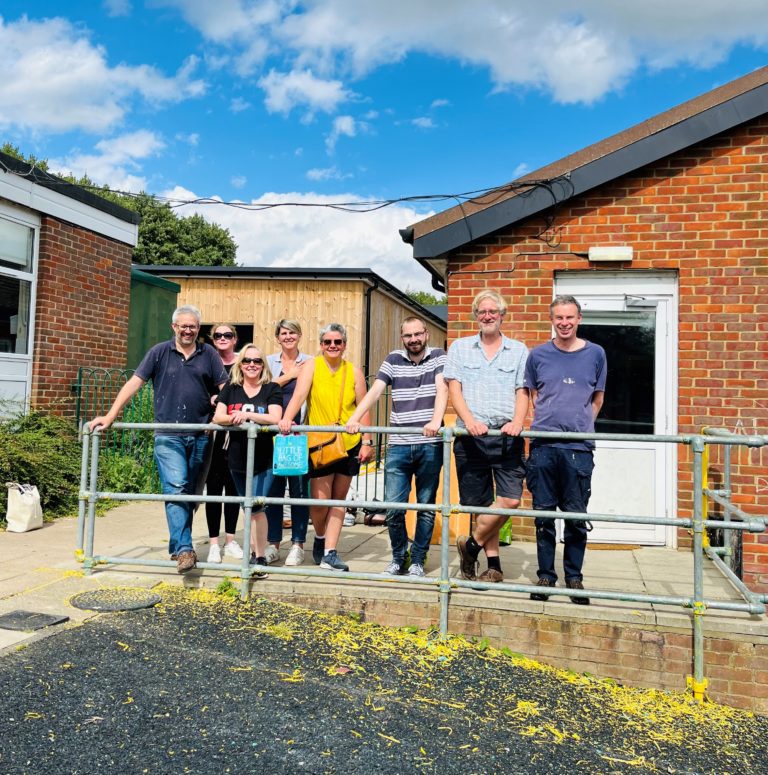
Open Door is a community café and arts space in Berkhamsted where locals can be active, creative and social, whatever an individual’s circumstances. Last year, we contributed a grant of £7,600 to Open Door which helped towards phase one of their ‘Community Garden Project’. The garden is part of a wider community enterprise and is available for local residents to enjoy.
SEP 09, 2024
Our volunteering stories
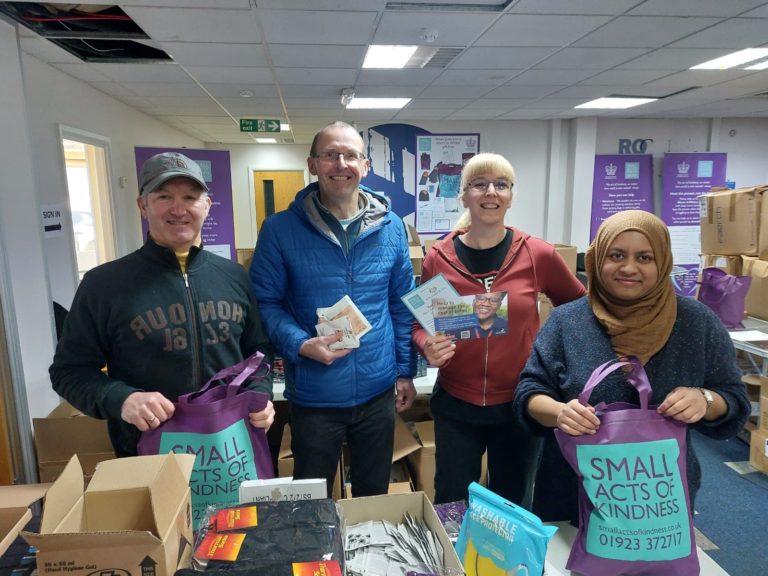
Sunnyside Rural Trust is a small, horticultural project for young people and adults with learning disabilities. It is a thriving charity and social enterprise with three sites, offering training and work experience for over 150 vulnerable people (trainees) in the local community.
SEP 09, 2024
UK Finance Annual Fraud Report 2024
Representing 300 firms, UK Finance is a world class trade association representing the banking and finance industry operating in the UK. Each year, UK Finance publish an in-depth Annual Fraud Report. The report publishes both the value of fraud losses and the number of cases involved.
SEP 09, 2024
Lesley’s Charity Walk
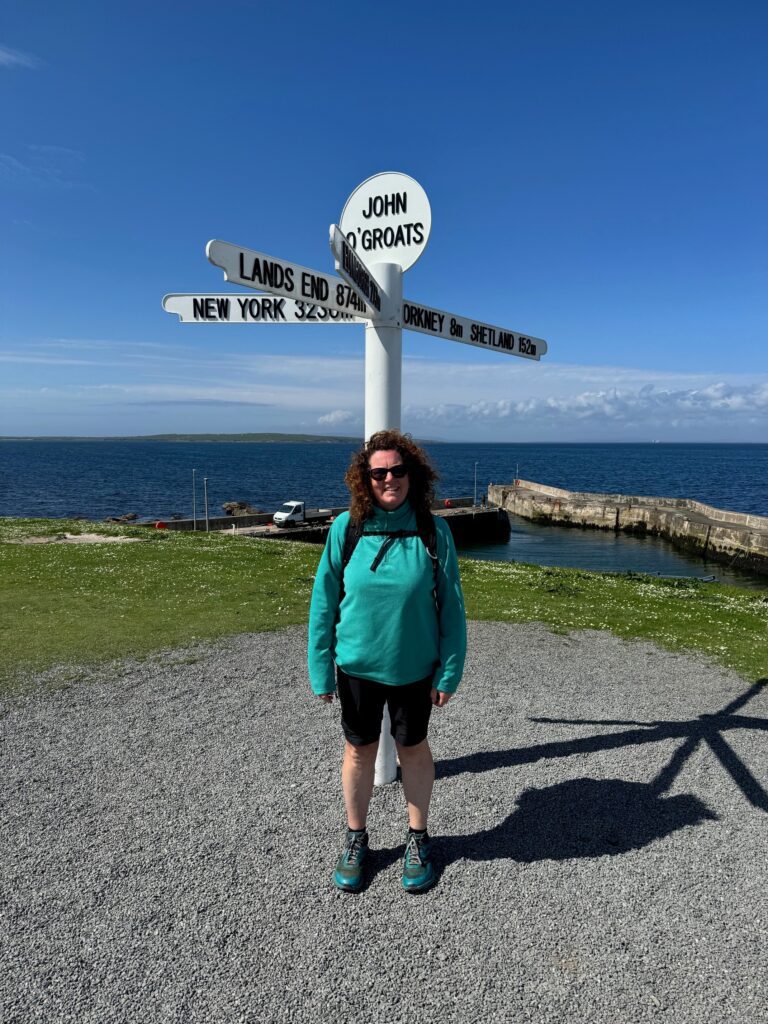
Lesley's Walk: Land's end to John O'Groats One of my aims in leaving full time work behind was to give me the opportunity to do things I’ve always wanted to do, and some things I wasn’t sure I wanted to do but challenged me in new ways. I’ve always loved hiking and for me this was the ultimate hike. It’s been a vague goal for as long as I can remember, and two years ago I started to think seriously whether it was something I could do. In preparation for the task, I did a two week walk - the Trans Pennine Trail - in August 2022 as a test to see how my body held up. Once that worked out well, I started planning in earnest. There is no set route, so I had to work out one of my own and plan where to stay each night. I booked 57 beds in October/November 2023 and the journey was set. In December, I started building up my walking and the weight I was carrying in my pack. Before I knew it, it was March 25th and I was getting the train to Penzance ready for the biggest physical challenge of my life. After a good night’s sleep, I made my way to Land’s End to get my photo taken next to the sign and started my walk towards John o’Groats. A typical day along my journey would be to get up between 7am and 7:30am - dress, pack, eat breakfast, buy food for the day, walk for 7-10 hours (depending on the length/difficulty of that day’s walk), shower, wash the day’s clothes and put out to dry. Then eat, recover and sleep. My most difficult moment was when I jarred my shin at the end of the first week. The next walking day, it was hurting so much that I didn’t think I could go any further. Paracetamol hadn’t helped so I sat down, took some Ibuprofen and rubbed the whole area with Voltarol. When nothing had changed after half an hour, I was walking and crying, thinking I just had to find a way to make it to my accommodation and then go home. After about an hour, the painkillers kicked in and walking became easier. The rest of that week, I dosed up on Ibuprofen and Voltarol and kept my swollen foot elevated when I wasn’t walking. Thankfully, it started to get better, and the swelling went down the following week. On the flip side, there were so many memorable moments during my journey; crossing the border to Scotland was probably the best as it was a big psychological milestone for me. 9 weeks and 5 days since I started my journey, not daring to believe that I would actually make it, I finally got to John o’Groats with the most incredible feeling of accomplishment. 58 days of walking at an average of 17 miles per day doesn’t begin to describe the variety of paths, roads and terrains that I walked on, the weather I walked in, and the views I was privileged enough to see. There were so many people who supported and encouraged me - their words of support kept me going when I thought I couldn’t and contributed to the fantastic total raised for Cancer Research UK. This was one of the biggest challenges of my life and I’m so happy that I completed it. You can sponsor Lesley here Lesley Beecher Non-Executive Director View as a PDF Take a look at Issue 3 of Mutual here.

SEP 09, 2024
WWFC Pavilion Project
Wheathampstead Wanderers Football Club - Pavilion Project Wheathampstead Wanderers Football Club (WWFC) was formed in 1990 by a small group of families from the village to promote and support youth football for the benefit of children and young people in Wheathampstead and surrounding areas. WWFC now provides football for over 600 children and teenagers across 49 teams. 90% of the children are from Wheathampstead, Harpenden and St Albans. In total they have 160 volunteers delivering 25,000 hours of community contribution each year. The club also welcomes 12,000 youth players and visitors to the site each year, many of whom travel up to an hour to play games at the site. The ethos of the founder members remains. A desire to create a positive environment based on mutual respect, a sense of fair play and good sportsmanship, rather than a “win-at-all-costs” attitude. Magnanimous in victory and dignified in defeat. Ensuring young players from all backgrounds have an equal opportunity to play football is key to WWFC. One of the districts in Wheathampstead is in the top third nationally for income deprivation and 21.8% of children live in poverty. Annual player fees at the club are set at some of the lowest in the area to ensure they don’t provide a significant barrier to participation. In addition, the club operates a hardship fund which provides free football for U6s and reduced fees for the U7s. Despite continued success of the club on the pitch, WWFC are the only large club in the area without permanent facilities for welfare and first aid, shelter, sanitation, refreshment and education for youth players and coaches. Their current facilities consist of just 3 portaloos. WWFC approached Hertfordshire Community Foundation to help receive funding to contribute towards their football pavilion development project, in partnership with Wheathampstead Parish Council and with the support of the Football Association and the Football Foundation. The new pavilion will include changing facilities, a club training room, toilets (with disabled access) and a kitchen, for serving hot and cold refreshments on match days. The outside parking area will also be redesigned to accommodate 130 spaces (an increase from the current 100 spaces). After a period of waiting, the lease was finally agreed between Hertfordshire County Council, who own the land, and Wheathampstead Parish Council. During this period however, total project costs increased from approximately £460,000 to nearly £600,000, largely caused by the huge increases in construction costs. Following meetings with the Football Foundation, construction of the pavilion was delayed even further whilst WWFC tried to attract further grants to help with the project. Despite the delays and at times some uncertainty about the project even taking place, construction is now fully underway at Butterfield Road. All the players, staff and parents are fully looking forward to making the pavilion their new home. We are delighted that our grant of £10,000 will help towards the construction of the pavilion, which will provide a huge boost in facilities for such a fantastic community club. A lot of hard work has gone into the project from many people at the club. We are very excited to get down to Wheathampstead to see the completion of the project. You can find out more about WWFC by visiting their website here View as a PDF Take a look at Issue 3 of Mutual here.