


Key Features
An ISA is an individual savings account. The main difference between this and other forms of savings accounts is that the interest you earn with an ISA is tax-free, whereas you may have to pay tax on other savings accounts.
Unlike a standard savings account you may have with your Bank or Building Society, an ISA allows you to save or invest up to a set amount (your ISA allowance) each tax year without having to pay tax on interest, dividends, or gains.
You get a new ISA allowance every year, which is set by the UK Government. The ISA allowance for the current tax year is £20,000. The tax year runs from April 6th to April 5th.
- There are several different types of ISAs, each one designed for a particular kind of saving or investing.
- The various types of ISA available include Cash, Stocks and shares, Innovative finance, lifetime and junior.
- New rules were introduced on 6th April 2024, you can now open as many ISAs as you want in a tax year. However, you still have the same ISA allowance of £20,000 across these accounts.
- ISA allowances can’t be carried over from one tax year to the next, so if you don’t pay in your full allowance before April 5th, you’ll lose the rest of that year’s allowance.
- Anything you save into an ISA after April 5th will be counted as part of your ISA allowance for the new tax year. Use it, don’t lose it.
ISA Accounts Available
5 Year Fixed Rate Cash ISA (Issue 2) – 30.11.2031
2 Year Fixed Rate Cash ISA (Issue 9) – 30.11.2028
Hart 1 Year Fixed Rate Cash ISA (Issue 3) – 30.11.2027
1 Year Fixed Rate Cash ISA (Issue 2) – 30.11.2027
Online Single Access ISA (Issue 3)
90 Days' Notice ISA (Issue 1)
Hart ISA (Issue 1)
Online ISA (Issue 4)
Cash ISA (Issue 2)
Notes: The information contained in this table forms part of the terms and conditions of the account and should be read in conjunction with our Cash ISA Terms and Conditions.
*AER stands for annual equivalent rate and illustrates what the rate would be if interest was paid and compounded once a year. Your tax treatment will depend on your individual circumstances and may be subject to change in the future. The rate of interest payable on variable rate accounts may be subject to change in the future.
Some help & guidance

Savings FAQs
Find clear answers to our most frequently asked questions, designed to help you make your savings journey as simple as possible.

Jargon Buster
Financial jargon can be confusing sometimes. Our jargon buster breaks down some of the common savings terms and abbreviations.

Forms & Documents
Here you will find some useful savings forms and further information documents to help you manage your savings accounts.



Latest News


Industry
JUL 31, 2026
Fixed Rate product update
FOR INTERMEDIARY/PROFESSIONAL ADVISORS ONLY. NOT FOR CONSUMER USE.

Latest News
JUL 10, 2026
Harpenden wins ‘Best Local Building Society’ at the 2026 What Mortgage Awards
Harpenden Building Society wins ‘Best Local Building Society’ for the 12th year in a row, as well as being marked ‘Highly Commended’ in the ‘Best Specialist Lender’ and ‘Best Large…
Industry
JUN 09, 2026
Harpenden launch Expat mortgages
FOR INTERMEDIARY/PROFESSIONAL ADVISORS ONLY. NOT FOR CONSUMER USE.

Our Insights
MAY 20, 2026
Jon’s Savings Blog – ISA Changes in 2027
There’s a famous saying: “The best time to plant a tree was 20 years ago. The second‑best time is now.” Well, when it comes to ISAs… the tree is about…

Industry
APR 22, 2026
Member Notice – Staff training 23rd April
Latest News
APR 17, 2026
A Q&A with our CEO Tracie
Here’s a quick Q&A from our CEO Tracie Meadows diving into our new rebrand.
Industry
JAN 22, 2026
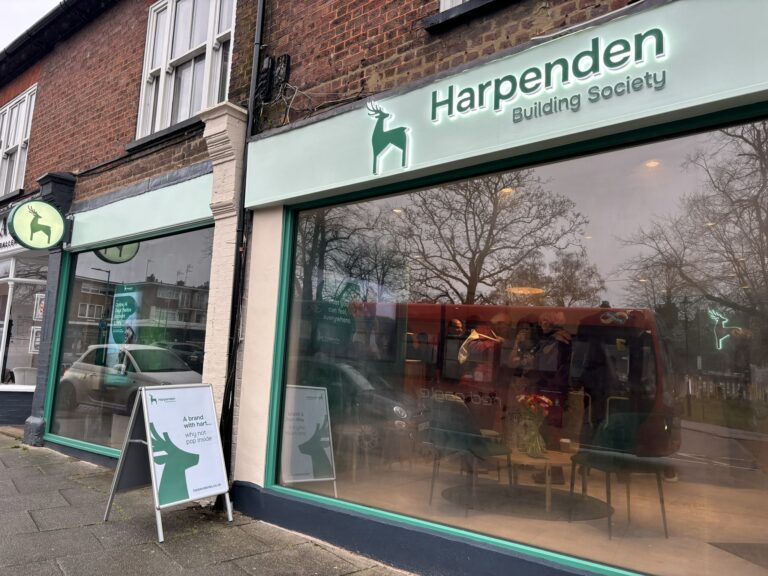
We celebrate our new branch opening in Harpenden
We are thrilled to announce the launch of our brand-new branch, located right on the High Street, in one of the busiest areas of Harpenden. The doors opened on the…